AI Summary
Andreessen Horowitz has published an essay arguing against the notion of an 'AI job apocalypse,' claiming it is based on flawed economic theories. The firm asserts that historical trends show technology often creates new job opportunities rather than eliminating them, despite some recent data indicating a decline in employment for certain entry-level positions.
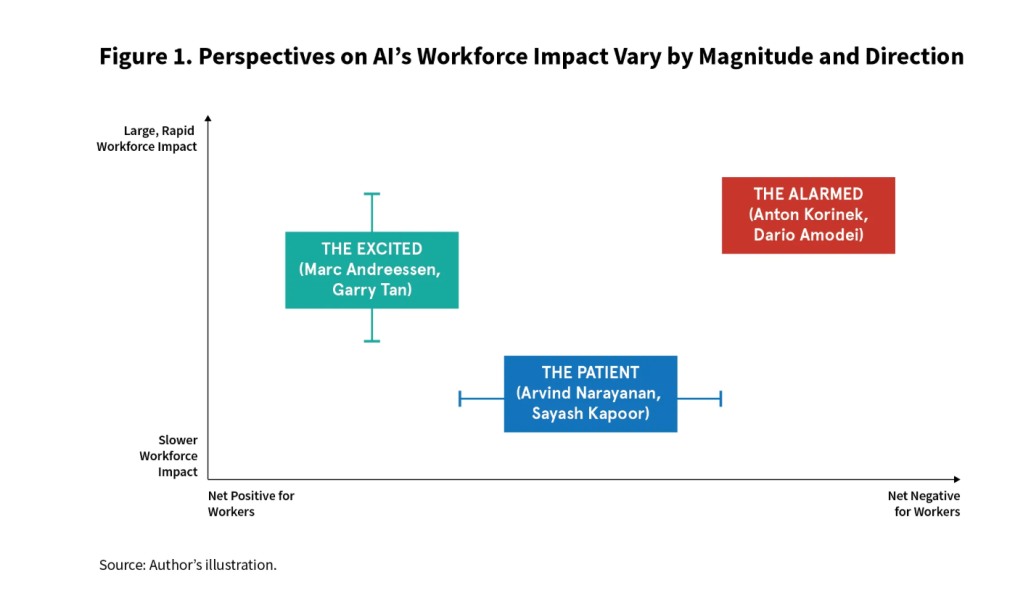
- Andreessen Horowitz's General Partner David George argues that fears of AI destroying jobs are exaggerated and based on the 'lump-of-labor fallacy,' which suggests a fixed amount of work in the economy.
- The firm cites historical examples, such as farm mechanization and electrification, to illustrate how technological advancements have historically led to job creation rather than loss.
- Current research indicates that AI adoption has not significantly impacted overall employment levels, with many firms reporting no changes in workforce size due to AI.
- Critics of a16z's position, including economist Anton Korinek, warn that advancements in AI could lead to a future where labor becomes optional, raising concerns about job displacement.
- The debate continues among economists, with differing views on the pace of AI adoption and its potential impact on job markets.
- A Quinnipiac survey shows a growing public concern, with 70% of Americans believing AI will reduce job opportunities, reflecting a significant increase from the previous year.
ai jobseconomicshistorya16zmarket trends