AI & Machine Learning
5d ago
Yale report highlights AI's potential to address national debt, warns of worker displacement costs
May 6, 2026
AI Summary
A Yale Budget Lab report suggests that AI could help reduce the U.S. national debt, currently at $39 trillion, through increased productivity. However, it cautions that supporting displaced workers could undermine these benefits, emphasizing the need for careful policy considerations.
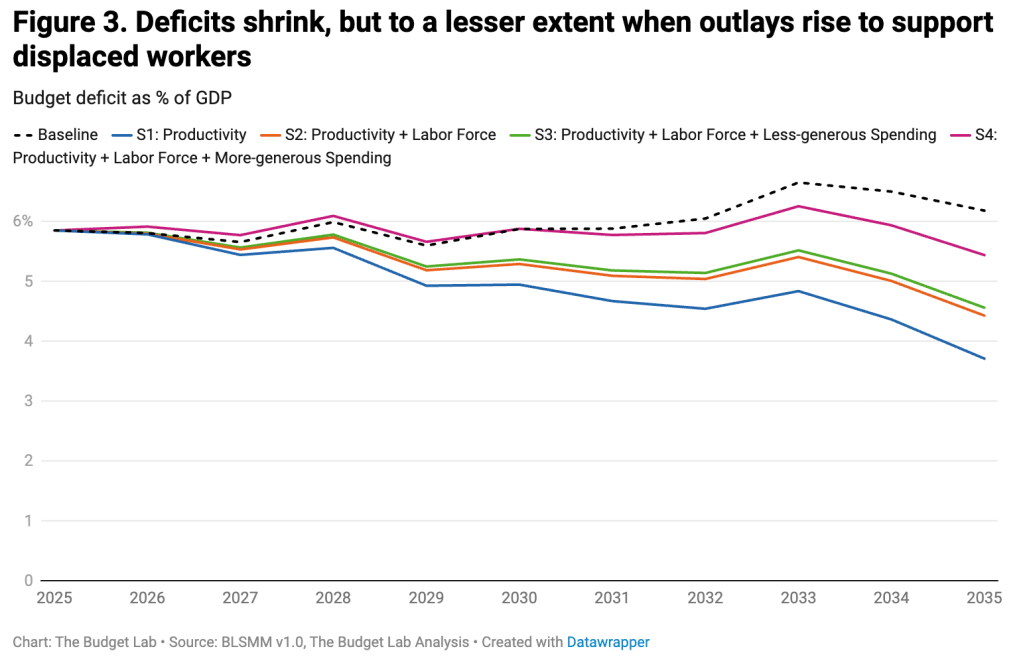
- The Yale Budget Lab report indicates that AI could significantly improve productivity, potentially addressing the national debt crisis.
- Moderate AI adoption may lead to a 2.5% annual growth in labor productivity, which could help reduce the debt-to-GDP ratio.
- The report warns that federal spending to support displaced workers could hinder the effectiveness of AI in reducing debt.
- Current national debt has reached 100% of GDP, with the U.S. spending $88 billion monthly on interest payments.
- To stabilize the fiscal situation, substantial tax increases or spending cuts totaling $827 billion may be necessary.
- The report also discusses the potential shift in tax burdens from labor to capital due to AI productivity, which could decrease federal revenues.
- Rapid productivity growth may lead to higher interest rates, increasing government debt servicing costs and offsetting fiscal gains from AI.
- The actual impact of AI on the labor market remains uncertain, with varying predictions about job displacement and transformation.
- Historical examples, such as the industrial revolution, highlight the need for governments to manage the costs associated with productivity shocks.
aieconomyworkforceproductivitynational debt